History
From the Royal Mint to today's Mint.

1686
The first coin
After visiting the mining town in the summer of 1685, the Danish-Norwegian King Christian V decided to move Norwegian coin production from Christiania to Kongsberg the following year. Less transport and a mint close to the silver mines would bring more money to the treasury.
The very first coin struck was a 4-mark from the opening year 1686 – today one of the most important issues in Norwegian numismatic history.
1814 – 2015
From Copenhagen to Norwegian ownership
Until 1814 the Mint was governed from Copenhagen. In 1816 it was placed under the Ministry of Finance, and Norges Bank took over in 1962. After becoming a limited company in 2002 and being sold in 2003, Samlerhuset became sole owner in 2015 – bringing the 300-year-old mint back into fully Norwegian ownership.
Timeline
Key dates
1686
The Royal Mint is established in Kongsberg as part of Kongsberg Silver Mines.
1816
The Mint is placed under the Ministry of Finance.
1962
Norges Bank takes over operations.
2002
The business becomes a limited company, owned by Norges Bank.
2003
Norges Bank sells the company to Samlerhuset and the Finnish state mint.
2015
Samlerhuset becomes sole owner.
Today
The Mint continues to produce Norwegian coins and medals in Kongsberg.
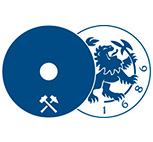
The mint mark
A mark with over 300 years of history.
The traditional mining mark – crossed hammer and pick – is the Mint's registered trademark and is still used as the mint mark on all Norwegian coins.
Until 1695 some Norwegian coins were still struck in Christiania, and the mint mark distinguished the two mints. The mark thus links every Norwegian coin to the mining heritage of Kongsberg.
Historical medals
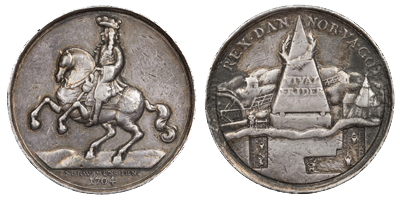
Medals since 1704